
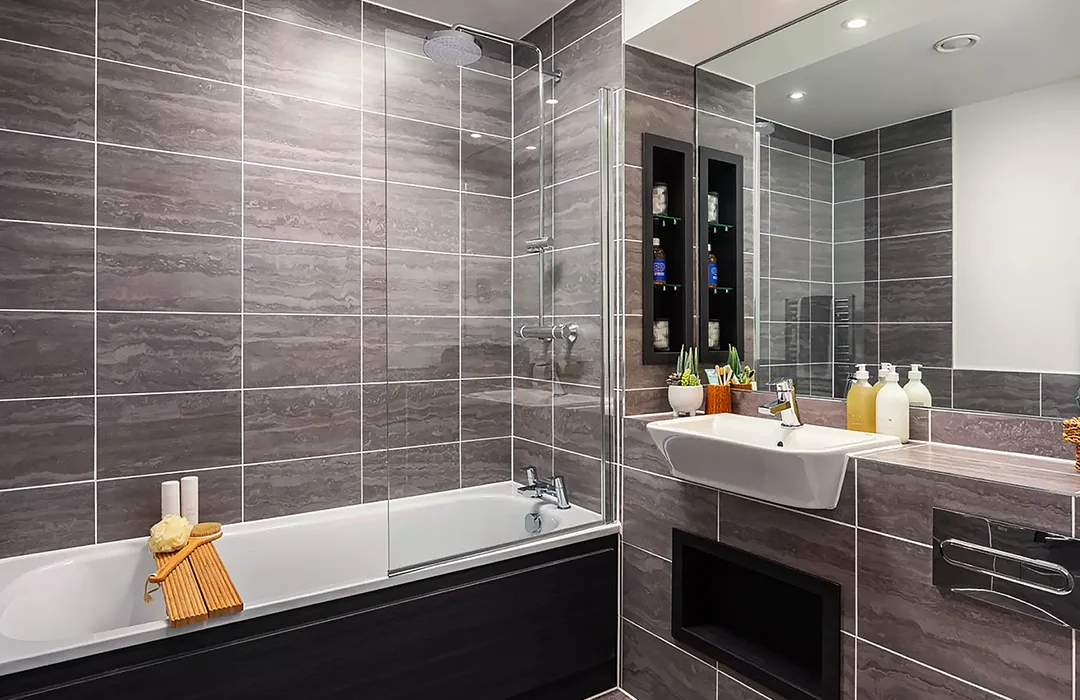
Many tiling failures in Melbourne homes are not caused by the tiles—but by what’s underneath them.
Screeding is one of the most important yet misunderstood steps before tiling. Without proper screeding, even premium tiles can crack, lift, or fail over time.
In this 2026 guide, Noble Tiling Solutions explains exactly what screeding is, why it matters, and when it is required.
What Is Screeding?
Screeding is the process of applying a smooth, level cement-based layer over a concrete or subfloor before tiling.
The purpose of screeding is to:
- Create a perfectly level surface
- Correct uneven or damaged floors
- Provide correct slopes for drainage
- Support tile adhesion
Image:
Freshly applied floor screed being leveled with a straight edge.
Why Screeding Is Essential Before Tiling
Tiling directly over uneven or damaged surfaces leads to:
- Cracked tiles
- Hollow sounds
- Poor drainage
- Tile movement
- Premature failure
Professional screeding ensures:
- Even tile height
- Strong adhesive bonding
- Long-term durability
Types of Screeding Used in 2026
Traditional Sand & Cement Screed
- Cost-effective
- Strong base
- Longer drying time
Fast-Drying Screed
- Ideal for tight schedules
- Faster tiling installation
- Higher cost
Self-Leveling Screed
- Best for minor imperfections
- Creates ultra-smooth finishes
- Suitable for large areas
Image:
Self-leveling screed flowing evenly across the floor.
Screeding for Wet Areas (Bathrooms & Balconies)
Wet areas require special screeding techniques.
Key requirements include:
- Correct slope to floor drains
- Waterproofing compatibility
- Stable base to prevent water pooling
Without proper screeding, waterproofing membranes can fail.
How Thick Should Screed Be?
Standard screed thickness in Melbourne projects:
- Bonded screed: 25–40 mm
- Unbonded screed: 50–70 mm
- Floating screed: 65+ mm
Thickness depends on floor condition and usage.
Drying & Curing Time (Very Important)
Improper drying causes cracks and weak screed.
General guidelines:
- Traditional screed: 7–14 days
- Fast-drying screed: 24–72 hours
- Always test moisture levels before tiling
Rushing this step is a costly mistake.
Common Screeding Mistakes to Avoid
- Inadequate surface preparation
- Incorrect mix ratio
- Poor compaction
- Insufficient slope in wet areas
- Tiling before screed has cured
Professional installation prevents all of these issues.
How Much Does Screeding Cost in Melbourne (2026)?
Estimated pricing:
- Standard screeding: $35 – $60 per m²
- Fast-drying screed: $50 – $80 per m²
- Self-leveling screed: $40 – $70 per m²
Final cost depends on:
- Floor condition
- Area size
- Screed type
Noble Tiling Solutions provides professional screeding services across Melbourne—ensuring flawless tile installation and long-term durability.
✔ Free Site Assessment
✔ Precision Leveling
✔ Licensed & Insured Professionals

Noble Tiling Solutions Pty Ltd